We have finally made it to Election Day! This won’t be a long post, but I wanted to give my prediction to the Presidential race in the State of Wisconsin. I am predicting that when all the votes have been counted Joe Biden will have won the state by about a seven-point margin: Biden 53% – Trump 46% – Jorgenson 1%. Using 538’s polling average and rounding to the nearest whole number, they have it at Biden 52% and Trump 44%. Of the remaining 4%, I’m guessing that 50% of the undecideds will go to Trump, 25% to Biden, and 25% to Jorgenson.
You might be asking, how I can be so confident in the polls that clearly missed what happened in 2016? For one, the pool of undecideds and third-party supporters is vastly smaller than what it was last time. In 2016, 13.1% of voters were in this group and they ended up breaking for Trump at a much higher rate than for Clinton. This year only 4.4% belong to that group. Another reason I feel better about the polling this year is Biden has hit 50% or better in numerous times here at the end of the cycle. it is actually more surprising when he doesn’t hit 50% in a poll for Wisconsin. Compare that to Clinton in 2016 where she only hit 50% once in a Public Policy Polling (PPP) poll from October 18-19 during the aftermath of the Access Hollywood tape. Finally, the quality of pollsters who have polled Wisconsin in the past couple weeks compared to those who polled at the end of 2016 are night and day. Ipsos and Marquette University were the only “A” pollsters to poll Wisconsin in the last two weeks of the race. Compared to today when Fox News, ABC/Washington Post, Marquette University, Emerson, and Siena/New York Times have all polled here in the last two weeks. Finally, the polls where only off by about a point in the 2018 midterms after the vast majority of pollsters corrected their methodology after 2016.
Finally, here are a few things I’ll be watching when the polls come in:
Does Biden win Kenosha County?
Does suburban Milwaukee County continue to move to the left?
How does turnout in the City of Milwaukee compare to 2016?
Does Trump rebound in the Milwaukee Suburbs/WOW Counties?
How close to 80% does Biden get in Dane County?
Does Biden rebound in the Madison Exurbs and Southwest Wisconsin?
Does Biden struggle in the southern part of the West Central Region like Tony Evers did?
Do we see a Democratic suburban surge in the Twin Cities exurbs?
Does Central Wisconsin continue to move towards Republicans?
Are the polls right and Biden is competitive in the Fox Cities?
Does Biden’s emphasis on his Catholicism help in in the very Catholic Fox Valley & Thumb region?
Does Trump continue to make massive gains in the Eastern and Western Northwoods?
How big (if at all) is the bounce back in Lake Superior Shoreline region?
The Fox Cities region is comprised of the counties that make up the Appleton-Oshkosh-Neenah, WI Combined Statistical Area (CSA). This includes the Appleton Metro Area which includes Calumet and Outagamie counties and the Oshkosh-Neenah Metro Area which is just Winnebago County. The Appleton-Oshkosh-Neenah CSA is the third largest CSA that is wholly in the State of Wisconsin, only behind Milwaukee-Racine-Waukesha and Madison-Janesville-Beloit. The core of this CSA is centered around the City of Appleton at the top of Lake Winnebago. This is where the lower Fox River flows out of the lake in a northeasterly direction and into Green Bay. There are a number of suburbs and sister cities that surround Appleton including Neenah, Fox Crossing, Menasha, Kaukauna, and Little Chute among others. There is a secondary population core on the west central shore of Lake Winnebago comprised of the City of Oshkosh.
At first, I was planning on including Brown County into this region. There are a number of strong ties between that county and this region. They share the same media market and it is not a long distance between Kaukauna and the start of the Green Bay suburbs. The issue is this would have then required I also include the remaining counites that are here in Northeast Wisconsin: Door, Kewaunee, and Manitowoc. There are not enough people in these three counties to warrant their own region, but their inclusion with Brown County would have resulted in the Fox Cities being largest region in the state by population by a huge margin. I also in my researched discovered an item that solidly tied Brown County with both Kewaunee and Manitowoc counties that made me feel much better about them being in their own region. Fond du Lac County also could have been included in this region. It would have completed the entire loop of counties around Lake Winnebago, plus there are a number of cultural connections between Fond du Lac and this region. For instance, Fond du Lac High School sports teams are in the same conference as schools in the core Fox Cities. However, it made more sense to use Fond du Lac as a connector between Dodge County and Sheboygan County in the Milwaukee Exurbs region in addition to the previously discussed ties it has with the Milwaukee Exurbs.
Demographically, the Fox Cites region is not that much different from the state as a whole. It is about seven points whiter than the state, but this difference is on the lower end of the spectrum. Its post-secondary degree attainment percentage is almost exactly the same as the state as a whole and its median income is only $3,803 higher than the state medium. The only thing different that really jumps out is that the Fox Cities region has the highest percentage of Dutch American compared to any other region in the state. This Dutch community is primarily in the Village of Little Chute and the towns of Kaukauna and Vandebroek. This higher than average Dutch population is probably a component as to why this region is more Republican than other urban areas of the same size both statewide and nationally.
Historically this has always been a pretty Republican region and metropolitan area. Even back in the day when the Republican Party was split between Progressive and Conservative Stalwarts, and the Democratic Party was an afterthought, this region stuck with the conservative side of the Republican Party. In fact, this was Joe McCarthy’s base in his primary run in 1946 against incumbent Senator Robert LaFollette Jr. It has really only been in the last twenty years or so that the two largest cities in the region, Appleton and Oshkosh, have moved at into the lean Democratic camp. The other cities and villages of decent size are for the most part toss ups or lean to the Republicans. This is Senator Ron Johnson’s home region and the boost he’s been able to get here has helped him in both of his elections against former Senator Russ Feingold.
In today’s environment, the goal for Biden or any Democrat is to keep the margin reasonably close here. Around a ten-point loss or better in this region typically means they can prevent the Republican from accumulating a large vote total here and get enough elsewhere to win statewide. Clinton’s twelve-point loss here in 2016 was probably right at the line at what she could afford to give Trump and still win statewide, if she had done better in other regions. One only has to look at the fact Evers still lost here by ten points, but that was enough to win statewide. Winning the region as Obama did in 2008 and Baldwin in 2018 means they are winning statewide by double digits. Obama’s win here in 2008 was pretty incredible. He won Outagamie and Winnebago counties by double digits and even won Calumet County. I doubt we’ll see anything like that again moving forward, unless the major municipalities were to take a stronger blue turn here.
August 1, 2020 Voter Registration Totals: 30,340 (0.89% of state totals)
PVI: R+10
2016 Presidential Margin: Trump +23%
2018 Gubernatorial Margin: Walker +23%
2018 Senate Margin: Vukmir +9%
Municipalities: Village of Harrison (12,358 – Partially in Outagamie County) Trump +22%
Calumet County is the most Republican county of this trio and outside of northwest corner is very exurban/rural. It is also a very Germany county. Biden will want to improve on the margins of both Clinton and Evers here by only losing in the high teens here. The place I would look on election day are the precincts of the City of Appleton that are in the northwest corner of the county. Clinton barely lost here and Evers only won by about a point. Biden will want to win here by at least a five-point margin. Biden would be on his way to a big statewide win if he’s also winning the City of Menasha’s precincts that are also in the northwest part of the county. Baldwin won those by three points. Trump would like to sweep this county again and push his margin into the upper twenties.
August 1, 2020 Voter Registration Totals: 108,075 (3.16% of state totals)
PVI: R+5
2016 Presidential Margin: Trump +13%
2018 Gubernatorial Margin: Walker +11%
2018 Senate Margin: Baldwin +0%
Municipalities: City of Appleton (74,098 – Partially in Calumet and Winnebago counties) Clinton +6, City of Kaukauna (16,270 – Partially in Calumet County) Trump +6, Village of Little Chute (12,081) Trump +12%
The sixth most populated county in the state, Outagamie County is the home to many of the major cities and villages in this region. The City of Appleton is a place where Biden would like to improve on Clinton’s margin and get close to a ten-point win. However, if there is one place to look on election day, it is the City of Kaukauna. Clinton lost it by five-points and Evers lost it by a point, while Baldwin won it by eleven. If Biden can pull out a win here, it means he’s probably getting enough to win statewide. If Biden is winning any other municipality in the county, he’s probably winning big statewide. Trump’s goal here would be to reduce Biden’s margin in the City of Appleton down to the low single digits. If Trump is winning Appleton, he’s on his way to a big statewide win.
August 1, 2020 Voter Registration Totals: 97,073 (2.84% of state totals)
PVI: R+3
2016 Presidential Margin: Trump +8%
2018 Gubernatorial Margin: Walker +4%
2018 Senate Margin: Baldwin +6%
Municipalities: City of Oshkosh (67,004) Clinton +5, City of Neenah (26,300) Trump +1, Village of Fox Crossing (19,012) Trump +11%, City of Menasha (17,873) Clinton +0%
Winnebago County is just a bit to the right of being a statewide bellwether. A Democrat winning here means they are probably winning statewide. Biden’s goal should be to win this county. The place to look on election day is the City of Neenah. Clinton lost here by a little under a point and Evers won by less than half of a point, while Baldwin won by over eleven. If Biden can win here by around three points, he’s probably winning the county. Biden would also like to push that margin in the City of Oshkosh up to around ten points. Also, If Biden is winning the Village of Fox Crossing, he’s on his way to a big statewide win. Trump would love to flip the City of Menasha, which he almost won, and maybe go for the sweep and win the City of Oshkosh.
I’m going to be 100% honest, in many ways this region is a hodgepodge of a bunch of different counties that really did not fit well in any of the other regions. The majority of the region is sort of in a no-man’s-land between the Central Wisconsin region centered on the Wisconsin River and the Fox Cities region on Lake Winnebago. Adams County could have possibly fit with Southwest Wisconsin, but I didn’t want that region to cross the Wisconsin River and there is nothing geologically in the county that could call for its inclusion into a Driftless Area region. Marquette County is in the Madison Media Market, but it is just too far away to justify its inclusion into the Madison exurbs region. Green Lake County shares a number of connections to Fond du Lac County, but there is no way one could justify any sort of connection between Milwaukee and Green County. Shawano County Is part of the Green Bay Combined Statistical Area, but when you start looking at demographic and socioeconomic factors, it makes sense to pair it with Waupaca County.
In terms of other counties that could have been added here, the only other one that could have made sense was Menominee County just north of Shawano County. This is home to the Menominee Indian Reservation and was formed in 1959 out of pieces of the surrounding counites. A large portion from Shawano County in particular. It could have made sense to pair this with the neighboring Stockbridge-Munsee Indian Reservation. I decided against this as if you again look at an aerial satellite footage, one can see that this county is predominately covered by dense forest. This makes it more appropriate to keep in the Eastern Northwoods. Finally, the City of New London straddles the line with Outagamie County, but it Outagamie County is the core of the Fox Cities region and would make little sense in this region.
So, what you really have in the East Central Wisconsin region is two subregions. The first subregion is Shawano and Waupaca counties. These are two very German counties rural counties, with a very high percentage of folks belonging to the evangelical Lutheran Church–Missouri Synod. The second subregion is to the south of this and includes Green Lake, Marquette, and Waushara counties and for the purposes of this breakdown, Adams County. This area is more rural than the northern subregion, but also more Catholic and less evangelical. Yet with those differences, when you look under the hood you can see that this region actually works pretty well put together.
For one, every county in this region is extremely rural. Waupaca County is the most populated county in the region and it only has about 51,000 people. The largest municipality, the City of Shawano, as of 2019 only has 8,935 people. Two, when looking ancestry figures in the region, this is the first one where American appears in the top five at 5.90%. This is also again a very white region, nine and half points higher than the state. Also, the median income is $6,023 less than the state median. Finally, the post-secondary degree attainment in the region is 13.3% less than the state percentage. This is the lowest region in the state These factors put together spell out a region that is right in the wheelhouse for Trump and the modern Republican Party.
Currently this region is only the second most Republican region in the state based on PVI. However, after the upcoming 2020 election I expect this region to pass the Milwaukee Suburbs to become the most Republican region. This region continues to get redder, while the Milwaukee Suburbs slowly move to the left. It’s amazing to think that only twelve years ago President Obama won five out of the six counties in this region, only losing Green County. Since than this region has rocketed to the right. This region saw the best improvement for Republicans from 2012 to 2016 as Trump improved on Romney’s margin here by twenty-four points. Looking at the previously discussed demographic and socioeconomic statistics of this region, it makes sense Trump would do very well here.
What is interesting is that both Baldwin and even to a lesser extent Evers were able to make some solid improvements on Clinton’s performance in this region. As seen in the swing map above, Evers outperformed Clinton pretty strongly almost everywhere. The only expectations were some of the towns and municipalities close to Evers’ problem county of Marathon. Biden would be thrilled if he could take down Trump a notch or two and get Evers’ margin here in November. That’s all he’d really need as I would expect Biden to improve on Clinton’s margins in other areas of the state. Trump would love for this to be a region of the state where he could expand on his 2016 margins and really push his margin up into the high thirties.
Roche-a-Cri State Park – Near Friendship Wisconsin
2019 Population: 20,220 (0.35%)
Average Vote from County Percentage: 0.35%
August 1, 2020 Voter Registration Totals: 11,878 (0.35% of state totals)
PVI: R+5
2016 Presidential Margin: Trump +23%
2018 Gubernatorial Margin: Walker +14%
2018 Senate Margin: Vukmir +3%
Municipalities: City of Adams (1,893) Trump +7%
Of all the counties in this region, Adams County is the only one that has the potential to be competitive. Prior to 2016 this county was essentially a bellwether, but in recent years it swung hard to the Republicans. On election day, I would focus on the Town of Dell Prairie. This town actually flipped to both Evers and Baldwin in 2018 after the Republican won it in the prior election. It was also one of only a few places where Evers outperformed Baldwin. If Biden is winning here it means he’s probably getting a positive result here in Adams County. Trump would love to complete the sweep again and push the margin up to the high twenties. Biden would be on track to a large statewide win if he’s winning the City of Adams and the Village of Friendship or even besting Baldwin and winning the county.
August 1, 2020 Voter Registration Totals: 10,730 (0.31% of state totals)
PVI: R+17
2016 Presidential Margin: Trump +40%
2018 Gubernatorial Margin: Walker +35%
2018 Senate Margin: Vukmir +21%
Municipalities: City of Berlin (5,385 – Partially in Waushara County) Trump + 27%
Green Lake County is the most Republican County in this very Republican region. Obama lost this county by around fifteen points in 2008 even as he was winning every other county in this region. I don’t expect Biden to get much out of this county, but his goal would probably be to match Evers losing margin of thirty-five points. It’s difficult to pick a specific place to look at on election day as every Republican since 2016 has swept this county, but if forced to pick I would say look at the City of Berlin in the northeast part of the county. If Biden is only losing here by around fifteen points, he’s losing by an acceptable margin. Trump would love to continue to expand on the Republican dominance here and get that margin into the upper forties. If Biden is winning any town of municipality in this county, he’s on pace to win the state in a landslide margin.
August 1, 2020 Voter Registration Totals: 8,987 (0.26% of state totals)
PVI: R+8
2016 Presidential Margin: Trump +25%
2018 Gubernatorial Margin: Walker +17%
2018 Senate Margin: Vukmir +8%
Municipalities: City of Montello (1,466) Trump +9
Like Adams County, this was a county that at one time a Democrat could win if they were winning statewide. Looking at the margins now it’s shocking to think that Obama won this in both of his elections. Biden’s objective here would be to get the margin down to about what Evers got here in 2018. To do so I’d look at the City of Montello. It almost exactly matched the statewide margin for the 2018 Gubernatorial race. From Trump’s point of view, he’d love to push this margin out to around thirty points. If Biden is winning any other local in this county like the Town of Buffalo, Village of Endeavor, or the Village of Oxford, he’s well on his way to a Baldwin size win statewide.
Old Tigerton Village Hall and Engine House – Tigerton, Wisconsin
Shawano County is historically a very Republican County, but there are a few Democratic hotspots here. In particular, in the north central part of the county, in the towns of Bartelme and Red Springs, is the Stockbridge-Munsee Indian Reservation. Biden’s objective here should be to try to get that margin down to around thirty points. On election day I would look to the Village of Gresham just south of the Stockbridge-Munsee Indian Reservation. If Biden is winning here, he’s probably getting the margin he needs here. Trump would love to push the margin here to forty points and maybe pick off the Village of Eland in the western part of the County. Biden would be on his way to a big statewide win if he’s winning the City of Shawano like Baldwin did.
Hartman Creek State Park – Near Waupaca, Wisconsin
2019 Population: 50,990 (0.88%)
Average Vote from County Percentage: 0.86%
August 1, 2020 Voter Registration Totals: 29,274 (0.86% of state totals)
PVI: R+12
2016 Presidential Margin: Trump +31%
2018 Gubernatorial Margin: Walker +26%
2018 Senate Margin: Vukmir +15%
Municipalities: City of Waupaca (5,969) Trump +7%
Like most of the counties in this region, Waupaca County is a very Republican County and it is historically so. Obama was the first Democrat to win here since FDR in 1936. The place to look at here on election day would be the City of Waupaca. Both Clinton and Evers got very close to winning the city and Biden winning it would mean he’s probably only losing here in the low twenties, which would be solid for a Democrat in this county. Trump would like to repeat his sweep in Waupaca County and push that margin out into the upper thirties. Biden would be on pace to win big win statewide if he’s winning anything else here like the portion of the City of New London that is in this county.
August 1, 2020 Voter Registration Totals: 13,581 (0.40% of state totals)
PVI: R+13
2016 Presidential Margin: Trump +34%
2018 Gubernatorial Margin: Walker +28%
2018 Senate Margin: Vukmir +16%
Municipalities: City of Wautoma (2,142) Trump +20%
Like Waupaca County, Waushara County is also historically a very Republican County. Obama in 2008 and Clinton in 1996 where the only Democrats to win here since FDR did in his first election in 1932.The place I would keep my eye on when the returns come in is the Village of Wild Rose in the central part of the county. Evers nearly won Wild Rose in 2018. If Biden can win it like Baldwin did, he’s probably only losing by a respectable amount here in the low twenties. Trump again wants to get the sweep here and would love it if he could push his margin up into the high thirties. If Biden is winning anywhere else in this county, like the Village of Hancock, he’d be on pace to have a pretty big win statewide.
This region is based around the Wausau-Stevens Point-Wisconsin Rapids Combined Statistical Area (CSA), incorporating its core counties of Marathon, Portage, and Wood. This area is colloquially referred to as the Wisconsin Valley as the majority of the major settlements are located on the Wisconsin River. Clark County was added to this region as four municipalities (City of Abbotsford, City of Colby, Village of Dorchester, and Village of Unity) straddle the county line between Clark County and Marathon County. There was no other factor present that could have overridden Clark County’s inclusion here in favor of another region.
There are a few other counties that probably could have been included in this region. The one that probably was the closest to being included was Lincoln County. Located just north of Marathon County, Lincoln County is included in the Wausau-Stevens Point-Wisconsin Rapids CSA and is the only county in the CSA not included in this region. Also, its only municipalities are located on the Wisconsin River, like the major cities in this region. It was a really close call, however I deiced to go with the Eastern Northwoods region for Lincoln County. If you look at a satellite view of the State of Wisconsin, you can see the dark and dense wooded area in the northern part of the state. The vast majority of Lincoln County is in this forested area. Taylor County, north of Clark County, was another potential addition here, but here too dense woodlands make up a large part of the county. The other surrounding counties were either too different from the other counties in this region or had a stronger tie to other regions.
A couple things pop out when looking at the demographics of the region. First, the largest minority group here in Central Wisconsin are Asian Americans. This is due in large part to the work of Catholic and Lutheran ministries to bring Hmong refugees to the City of Wausau during the mid-1970s. The Hmong were allies of the United States in Southeast Asian during the Vietnam War and the later stages of the Laotian Civil War. At the conclusion of both conflicts, Hmong were subjected to targeted attacks and tens of thousands were killed, imprisoned or forced to flee. The City of Wausau was the first place in Wisconsin to receive Hmong refugees and today Hmong Americans make up 11% of the city’s population. The second thing that jumps out in this region is it has the highest percentage of people claiming Polish ancestry. Northeastern Portage County into southeastern Marathon County is in fact one of the most concentrated Polish American areas in the country. In fact, the Town of Sharon in Portage County was the most Polish place in the United States in 2000 at over 60%. Finally, one should note that this region is over nine points whiter than the rest of the state, has a Black population so small it’s under one percent, is below the state medium income by $2,615, and its college degree attainment is four points less than state percentage.
Historically this was one of the stronger regions in the state for Democrats. Polish Americans were once one of the core constituencies of the Democratic Party in Wisconsin. This former strength among Polish Americans allowed Democrats to offset some of the Republican strength, built around German American voters, in Marathon and Wood counties. For example, Portage County has voted for Democrats in every Presidential race going back to 1956 and if you exclude Eisenhower, you have to go back to 1924. Even as recent as 2008, Obama was getting over 60% of the Polish vote. This started to fade in 2012 when Obama won Polish Americans by around five points and then dramatically plummeted in 2016 as Trump won the Polish vote by almost nineteen points. Evers only did about a point better than Clinton in 2018 and even Baldwin lost them by three points. This was after Baldwin won the group by eight in 2012 against Tommy Thompson. A lot of this is the breakdown of old political ties that were based on ancestral/religious identity and the increasing importance of urban vs. rural as the new identifier that binds people to certain political parties.
While other regions like the Madison Exurbs, Southwest Wisconsin, Lake Superior Shoreline, etc. bounced back strongly to the statewide Democratic candidates in 2018, this region really did not. Evers only did 1.33% better than Clinton and as one can see in the map above, Walker did better than Trump in a shocking number of localities. Plus, Baldwin lost here after winning the region in 2012. That all being said, this is a region I could see Trump improving on his 2016 margin, even if Biden has a healthy lead statewide. Trump would love to push the margin here even farther into the low twenties, while Biden would be content somewhere in-between Evers and Baldwin in the high single digits.
In many ways this region has become one of the core areas in the state for Trumpism. One only needs to look at the 2018 Republican Senate Primary where this was one of the stronger areas in the state for Kevin Nicholson, the preferred candidate for many in the Trump sphere. This was in comparison to the more establishment friendly Milwaukee Suburbs where both Nicholson and Trump in 2016 did not perform that well in their respective primaries.
Original Colby Cheese Factory – Near Colby, Wisconsin
2019 Population: 34,774
Average Vote from Region Percentage: 0.45%
August 1, 2020 Voter Registration Totals: 15,365 (0.45% of state totals)
PVI: R+12
2016 Presidential Margin: Trump +34%
2018 Gubernatorial Margin: Walker +30%
2018 Senate Margin: Vukmir 13%
Municipalities: City of Neillsville (2,409) Trump +19%
Clark County is a very rural and Republican county. It’s amazing to think that Obama won here in 2008 by eight-points. Biden has no chance to win here, but like the other super Republican counties he would like to improve on Clinton’s margin here and only lose by around twenty-five points. The place to look here on Election Day is the Town of Sherwood in the southeast corner of the county. Clinton only lost here by three and Evers only won here by a little less than a point. A healthy lead here for Biden would probably mean he’s getting the margin he’d want in this county. Trump would obviously like to repeat the countywide sweep and expand his lead into the high thirties. If Biden is winning any other town or municipalities like the Town of Reseburg or the City of Greenwood, he’s cruising to a big statewide win.
August 1, 2020 Voter Registration Totals: 78,832 (2.30% of state totals)
PVI: R+8
2016 Presidential Margin: Trump +19%
2018 Gubernatorial Margin: Walker +21%
2018 Senate Margin: Vukmir +6%
Municipalities: City of Wausau (38,561) Clinton +4%, Village of Weston (15,167) Trump +16%
Marathon County at one point was a swing county that typically only leaned about three to four points more Republican than the rest of the state. That has changed in recent years as it has zoomed to the right. This is one of the few counties not in the Milwaukee area where Evers did worse than Clinton. Not even Baldwin could win here while winning statewide by eleven points. Biden’s goal here should be to get Trump’s lead down to the low double digits. The place to look with the returns start to come in is the largest city in the county, Wausau. Clinton only won here by four points in 2016 and Evers only won it by two points in 2018. Biden would be getting the percentage he wants in this county if he can push that lead up to the high single digits. Trump’s goal here would be to improve on Walker and win Wausau to sweep the county. Biden would be on pace for large statewide win if he could show some resurgence in the old Democratic strongholds in the Polish American areas like the Town of Bevent or win some of the Wausau suburbs like Rothschild or Schofield.
August 1, 2020 Voter Registration Totals: 42,766 (1.25% of state totals)
PVI: D+3
2016 Presidential Margin: Clinton +3%
2018 Gubernatorial Margin: Evers +6%
2018 Senate Margin: Baldwin +16%
Municipalities: City of Stevens Point (25,880) Clinton +26%, Village of Plover (13,099) Clinton +2%
As previously mentioned, this has traditionally been one of the strongest counties in the state for Democrats. Not only were there rural Polish voters in the northeast corner of the county, but also the presence of the University of Wisconsin-Stevens Point. Now that the rural Polish vote has abandoned Democrats for the most part, Stevens Point is all that’s left. This is why Democrats still win here in almost every election, but no longer get the massive margins that they got in the past. This is the main county in the region where Biden will need to improve if he wants to cut down on Trump’s margin in Central Wisconsin. The key place I would look at in November is the Town of Hull just north of Stevens Point. Both Clinton and Evers lost here in the low single digits, while Baldwin won here by nine. A win here by Biden means he’s probably getting the improvements over Clinton and Evers that he would like to get in Portage County. Trump would love to grab some of the low hanging fruit by taking the villages of Amherst and Plover. Doing so would maybe flip the county to him, which again would be a first for a Republican since 1956. Like in Marathon County, Biden would be ecstatic if he’s winning back some of the traditional Polish American Democrats by winning the village of Rosholt or even the Town of Alban, where Baldwin actually tied Vukmir.
Verso Corporation Paper Mill – Wisconsin Rapids, Wisconsin
2019 Population: 72,999
Average Vote from Region Percentage: 1.25%
August 1, 2020 Voter Registration Totals: 42,454 (1.24% of state totals)
PVI: R+7
2016 Presidential Margin: Trump +20%
2018 Gubernatorial Margin: Evers +16%
2018 Senate Margin: Vukmir +3%
Municipalities: City of Marshfield (18,471 – Partially in Marathon County) Trump + 10%, City of Wisconsin Rapids (17,610) – Trump +12%
This county in the past was similar to Marathon in that it typically was close to the state margin, plus about three to four points to the Republicans. This changed greatly in recent years as both Trump and Walker swept every town and municipality in this county. Biden’s goal here in the election should be to try to prevent the sweep again by winning either Marshfield or Wisconsin Rapids. Baldwin won both cities in 2018, so while difficult, would not be impossible. Doing so would probably result in Biden only losing here in the low teens, which is what he’d want to get here in order to win statewide. Trump would love to push his margin here into the mid to high twenties range. Biden would be on pace for Baldwin level statewide victory if he’s winning more than the aforementioned larger cities in the county.
A fun fact about Wood County is it is the largest producer of cranberries in the world. The United States produces the most cranberries of any nation on earth and of that Wisconsin produces 65% of the entire American crop, with Wood County producing the most of any county in the state. Also paper industry was crucial to the local economy here, but unfortunately the major plan shown in the picture above is closing as a result of the lack in demand for paper due to COVID-19.
The Minneapolis–St. Paul–Bloomington Metropolitan Statistical Area is comprised of sixteen counties, two of which are in Wisconsin. The counties of Pierce and St. Croix make up only a little over 3% of the population of the Metro Area and 16% of its land area. However, the influence the Twin Cities have on these two counties are immense and make them fundamentally different than the surrounding regions.
St. Croix County was the first of the two counties to be added to then Minneapolis–St. Paul Standard Metropolitan Area in 1973 as the region continued to grow at a robust and steady rate. The economic and commuter connections across the St. Croix River became too strong to ignore. This has included large population growth for St. Croix County as its population has doubled since its inclusion in the Twin Cities Metro Area. This included a 33.6% growth rate in the 2000’s, which was the fastest for any county in the state of Wisconsin in that decade. This slowed during the Great Recession and has never really recovered in the 2010’s as the population growth has only been 7.5%, the smallest it has been here since the 1950’s. Pierce County was added in the 1990’s as its population became more connected to the Twin Cities. Its growth, however, has not been as fast as St. Croix’s.
One might ask why not just include these counties with the West Central Wisconsin region. It racially looks similar and the ancestry numbers are also similar, with the only difference being you start to see some decent percentages of Swedish Americans as we continue to move to the north and west. Also, it’s the population is not that large. Only the Lake Superior Shoreline has a smaller population than this region. That all said, its connections to the Twin Cities has resulted in a population that is fundamentally different than the surrounding areas and is much more white collar in nature. At $70,738, the median income is $16,128 higher than the state medium and second highest statewide, only behind the Milwaukee Suburbs. It also has the fourth highest post-secondary degree attainment in the state, 6.1 points higher than the state percentage. These data points outweigh the smallness of the region and some of the similarities to the West Central Wisconsin region in warranting that this become its own region.
The only other county I considered for this region was Polk County, north of St. Croix County. There are some connections between Polk County with the rest of this region and the Twin Cities. The strongest being Interstate Park, a State Park on the St. Croix River that is run jointly by both the Minnesota DNR and Wisconsin DNR. The Minnesota side is located in Chisago County, which is one of the fourteen Minnesota counties that make up the Twin Cities Metro Area. However, the median income and educational attainment is much smaller in Polk County than in Pierce or St. Croix County. Plus, it is not included in the Minneapolis–St. Paul–Bloomington Metropolitan Statistical Area. It would not surprise me if one day it joined that Metro Area, but it is not there yet.
Politically this region is pretty Republican, but this has not always been the case. Before its identity really started to converge with the Twin Cities Metro, it voted almost identically with the West Central Wisconsin and Western Northwoods regions, typically for Democrats. Bill Clinton won this region both times in the 1990’s and statewide Wisconsin Democrats regularly won here in the 2000’s. This started to shift nationally in the Bush era and then locally in the Walker era as the exurban areas throughout the state and nationwide shifted strongly to the Republicans. Pierce County will sometimes still vote Democratic as its largest city, River Hills, is a college town that pretty consistently supports Democrats. That all said, as the suburbanization process continues and the Twin Cities region continues to grow, these exurbs will probably start to behave and vote like other suburbs in the region. You can see this with how both Evers and Baldwin improved on Hillary Clinton’s margin here. Evers almost matched Obama’s 2012 margin and Baldwin got close to winning here. Biden obviously doesn’t need to win this region to win Wisconsin, but he’d like to narrow Trump’s lead here down below ten points. Trump on the other hand would love to stretch this lead out to over twenty points.
Kinnickinnic State Park – Near River Falls, Wisconsin
2019 Population: 42,754 (0.73%)
Average Vote from Region Percentages: 0.72%
August 1, 2020 Voter Registration Totals: 24,056 (0.70% of state totals)
PVI: R+5
2016 Presidential Margin: Trump +15%
2018 Gubernatorial Margin: Walker +3%
2018 Senate Margin: Baldwin +6%
Municipalities: City of River Falls (16,027 – Partially in St. Croix County) Clinton +8%
Pierce County is a county that tends to tease Democrats on election night. I think this is partially due to the fact the City and Town of River Falls, the main Democratic strength in the county, tends to report first. I thought for sure Evers had won this county in 2018, but the final batch of precincts were very pro-Walker. This is a borderline swing county in this election given that Evers only lost by three points and Baldwin won by six. It’s not a county Biden needs to win, but reducing Trump’s big margin from 2016 down to the mid-single digits would help statewide. The place to watch in November is the Village of Spring Valley in the northeast corner of the county. The winning percentage for both Trump and Baldwin in this village matched their statewide percentage and even Evers won it against Walker. Biden could be on path to win this county and have a large statewide win if he’s winning the towns of El Paso and Rock Elm like Baldwin did. Trump would love it if he could win the Town of River Falls, leaving Biden with only the city of the same name.
August 1, 2020 Voter Registration Totals: 55,320 (1.62% of state totals)
PVI: R+10
2016 Presidential Margin: Trump +20%
2018 Gubernatorial Margin: Walker +14%
2018 Senate Margin: Vukmir +6%
Municipalities: City of Hudson (14,103) Clinton +0%, City of New Richmond (9,414) Trump +13%
I’m still not sure exactly what is going on here in terms of its political direction. Trump did over six points better than Romney did here, but his vote percentage remained exactly the same, the marginal improvement was due to those six points voting for third parties. The county swung to the Democratic candidates in both 2018 elections, which makes me think that maybe there is a growing shift here to the left. That said I don’t expect Biden to win here, but he’d probably want to get the margin down to around what Obama did in 2012 or little better. The place to look here would be the Village of North Hudson. Evers only lost here by a little over two points and Baldwin won by over four points. If Biden can pull out a win here, it means he’s probably only losing in the low double digits or high single digits. If Biden is winning a place like the Village of Hammond, his margin here is even closer and he’s probably looking at a strong statewide win. Trump would love to reverse some of the suburban problems he’s experienced and sweep this county by winning the City of Hudson and even the piece of the City of River Falls that’s in this county.
This region can be viewed as the northern Driftless Area region. The main population base in this region is the Eau Claire-Menomonie Combined Statistical Area (CSA). This includes Chippewa, Dunn, and Eau Claire counties. This area is also referred to as the Chippewa Valley as the Chippewa River flows though all three counties. Also included in this region are the counties that are along the Mississippi Rivers and have major Wisconsin rivers (Black, Chippewa, and Trempealeau) empty out into the Mississippi River within their borders. This includes Buffalo, Pepin, and Trempealeau counties. Finally, we include Jackson County as it makes sense from a geographical sense.
As mentioned in the entry on Southwest Wisconsin, this region could have been combined with the Southwest region to create a mega Driftless Area region. This would have been the second most populated region in the state and by far its largest in area. In short it would have been too big. The split between the two regions makes sense as there are different political, cultural, and historical characteristics between the two regions. Also, it allows us to have one region that is centered around La Crosse and the Wisconsin River and another that is centered around Eau Claire and the many major northern Wisconsin rivers that come into the Mississippi River.
A couple counties possibly could have been in other regions. Jackson County doesn’t completely fit in this county as it’s neither part of the Eau Claire-Menomonie CSA and it does not border the Mississippi River. However, due to the prominence of the Black River through the county it makes sense to group it with the county where it empties out into the Mississippi River, Trempealeau County. Chippewa County has many features that make it more in common with the Western Northwoods region, but with it being a part of not only the Eau Claire-Menomonie CSA but also the Eau Claire-Chippewa Falls Metropolitan Statistical Area (MSA) makes its inclusion here clear.
There is also the question of Clark, Pierce, and St. Croix counties, as all three could have been included in this region. The Black River flows through the heart of Clark County which clearly connects it with Jackson and Trempealeau counties. Yet at the same time there are four municipalities (Abbotsford, Colby, Dorchester, and Unity) that straddle the county line between Clark and Marathon, which clearly shows that Clark should be in the Central Wisconsin Region. Then there is the question of Pierce and St. Croix counties. They could definitely be included in this region as Pierce County is a Driftless Area county and there are strong connections between St. Croix County and the Eau Claire area. However, these two counties inclusion in the Minneapolis–St. Paul–Bloomington MSA makes them clearly different than any other region in the state and worthy of being their own region, which will be discussed in further in the next regional breakdown.
This region is also very white, about ten points more white than the state percentage and there is no minority group that has a higher percentage here than the state as a whole. It is also the most Norwegian region in the state at 19.9% which is almost twelve and a half points higher than that state percentage. This mixed with the slightly larger German population results in a region were Catholicism is only the largest denomination to the Evangelical Lutheran Church of America (Mainline Lutherans) by 1.38%. The is the closest Catholicism gets to being number two in one of the seventeen regions. I plan on doing a couple of supplementary articles in the future on ancestry and religion in Wisconsin and how it intersects with elections today. This region is also below the statewide median income by $3,155, but only slightly below the statewide percentage for those attaining a college degree.
Historically, this region has a varied political history. As a heavily Norwegian area it in many ways followed the political whims of that ancestry group. Early in Wisconsin’s history this region was very Republican, but more on the left side of the party. It was an early supporter of Robert M. LaFollette’s Progressive wing of the Wisconsin Republican Party. It then strongly supported the Wisconsin Progressive Party that broke off from Republicans under the leadership of LaFollette’s kids in 1934. After the Progressive’s dissolved in 1946 the region went back to supporting left leaning Republicans, but starting in the 1960’s and 1970’s this area began to move to the Democrats as the Republicans shifted to the right in the state and the Democrats to the left. Post-Kennedy, Democrats that won the state typically won this region. Just look at the county maps for Carter, Dukakis, Clinton, Gore, and Kerry.
Like the Madison Exurbs and Southwest Wisconsin regions, this was another region that saw a large shift to Trump. Obama won this region by solid margins in both of his elections, only to have Trump win it with a sixteen-point swing in 2016. What makes this region different however is, unlike the other two aforementioned regions, this one didn’t totally come back to the Democrats in 2018. Evers lost this region by a little over a point and only won Eau Claire County. Compared to Clinton, Evers did better almost everywhere, with the exception of along the Mississippi River in the southern part of the region. Baldwin on the other hand had a double-digit win and came 104 votes short of sweeping every county in the region, losing only Buffalo, Chippewa, and Pepin Counties. This large difference between Baldwin and Evers in this region and in many upcoming regions is why I am going to be including regional maps of the 2018 Senate Election from now on. In terms of 2020, this is again a region that Biden needs to improve on if he wants to win statewide, but like the Southeast Wisconsin region, it is not necessary that he wins this region. Trump would love to improve on the big swing that he got here in 2016 and push that lead up into the double-digits.
Merrick Start Park – Near Fountain City, Wisconsin
2019 Population: 13,031 (0.22%)
Average Vote from Region Percentages: 0.23%
August 1, 2020 Voter Registration Totals: 7,916 (0.23% of the state total)
PVI: R+7
2016 Presidential Margin: Trump +23%
2018 Gubernatorial Margin: Walker +18%
2018 Senator Margin: Vukmir +0%
Municipalities: City of Mondovi (2,564) Trump +19%
Buffalo County is a rural county that borders the Mississippi River. Prior to Trump’s victory in 2020, this county was on of the top contenders to be the bellwether county for the state of Wisconsin. Since 2016 this has become a typically reliable Republican/Conservative county. The place to look here on election day would be the Village of Nelson in the northwestern part of the county. It was close to the both race’s margin in 2018 and Trump only got 50% of the vote here in 2016. Biden won’t win the county just because he’s winning the Village of Nelson, but it would be a good sign statewide. If Biden is winning the county here or getting close to Baldwin’s margins, he’s clearly in for a big win statewide. Baldwin narrowly won the Town of Buffalo in the southern tip of this county after losing it in 2012. If Biden wins there, he could be close to winning the county. Trump would love to continue to push that margin upward into the high twenties.
Lake Wissota State Park – Near Chippewa Falls, Wisconsin
2019 Population: 64,658 (1.11%)
Average Vote from Region Percentages: 1.05%
August 1, 2020 Voter Registration Totals: 36,172 (1.06% of the state total)
PVI: R+7
2016 Presidential Margin: Trump +20%
2018 Gubernatorial Margin: Walker +14%
2018 Senator Margin: Vukmir +0%
Municipalities: City of Chippewa Falls (14,366) Trump +1%
Chippewa County is a split county in terms of its personality. In the Southwest part of the county you have the City of Chippewa Falls, the Village of Lake Halie, and part of the City of Eau Claire. This area is part of the more direct urban and suburban areas around Eau Claire. It is a swingier area and typically supports the statewide winner. The rest of the county has more of rural and small-town vibe and is pretty Republican. Obama won here in 2008 but lost in 2012, even as Baldwin won the county in her first Senate election. The place to look in this county when the returns start to come in is the City of Chippewa Falls. Clinton lost here by a little under a point in 2016 and Biden will not only want to win Chippewa Falls but do so by around five points or better. Biden will be super thrilled if he can match Baldwin’s margin or even gain the few necessary votes need to win the county. If he’s winning the Village of Lake Hallie he’ll be thrilled, while Trump will want to improve on his 2016 performance by having a clean sweep of all towns and municipalities in this county.
August 1, 2020 Voter Registration Totals: 24,435 (0.71% of the state total)
PVI: R+3
2016 Presidential Margin: Trump +12%
2018 Gubernatorial Margin: Walker +3%
2018 Senator Margin: Baldwin +6%
Municipalities: City of Menomonie (16,551) Clinton +14%
Dunn County is one of the true swing counties in this region and the state. It is home to the University of Wisconsin-Stout in the City of Menomonie, which is the official technology school of the University of Wisconsin system. It will be interesting to see if COVID-19 results in a reduction of normal turnout for a Presidential election. Biden doesn’t need to win this county to win statewide, but he would like to reduce Trump’s lead to under five points here. On election day, I would look at the Village of Elk Mound in the eastern part of the county as it flipped to both Evers and Baldwin in 2018 after going for Trump by almost nine points in 2016. Biden will be on his way to large statewide win if he’s winning this county and to do that, he needs to win a few of the towns in this county. The one I would look at is Town of Menomonie just to the west of the namesake city. Baldwin won it by close to the county’s margin. Trump would love to repeat the near sweep that he got here in 2016 and reduce Biden’s margin in the City of Menomonie down to under ten points.
August 1, 2020 Voter Registration Totals: 61,138 (1.79% of the state total)
PVI: D+4
2016 Presidential Margin: Clinton +8%
2018 Gubernatorial Margin: Evers +12%
2018 Senator Margin: Baldwin +22%
Municipalities: City of Eau Claire (68,802 – Partially in Chippewa County) Clinton +18%
Eau Claire County is a lot like the La Crosse County in this region. It was the only county that Hillary Clinton won in 2016 and there is a sizeable student population here with the University of Wisconsin-Eau Claire. Home to the largest city in the region and eighth largest city statewide, this is county where Biden would love to push up the margin a bit more in order to bank more votes. The place I would look on election day is the City of Altoona, a suburb just to the east of the City of Eau Claire. Biden wants to match or do better than Evers’ six-point margin here as that would mean he’s winning the county by over ten points. If he’s winning any of the towns that surround Eau Claire and Altoona or all of them like Baldwin did, he’s probably getting over 60% of the vote here and winning big statewide. Trump would love it if he could flip the City of Altoona as it would indicate that he’s winning by a solid margin statewide.
Silver Mound Archeological District – Near Alma Center
2019 Population: 20,643 (0.35%)
Average Vote from Region Percentages: 0.31%
August 1, 2020 Voter Registration Totals: 10,603 (0.31% of state totals)
PVI: R+1
2016 Presidential Margin: Trump +12%
2018 Gubernatorial Margin: Walker +5%
2018 Senator Margin: Baldwin +10%
Municipalities: City of Black River Falls (3,465) Clinton +4%
Jackson County is the second of three swing counties in this region. It is a pretty rural county that was pretty consistently Democratic up until Trump’s win in 2016. This a county that Biden would like to win, but not a necessary county for him. He’d probably be fine with a narrow loss here that was slightly better than Evers’ 5-point defeat. When the returns come in, I would look at the Town of Irving in the southwest part of the state. Walker won here by just over a point. A Biden win here would result in a countywide margin around where it needs to be. Biden is in for a solid win here if he can win a place like The Town of Albion like Baldwin did, while Trump would love to continue to expand on his 2016 margin by winning the City of Black River Falls, the largest city in the county.
August 1, 2020 Voter Registration Totals: 4,169 (0.12% of state totals)
PVI: R+7
2016 Presidential Margin: Trump +24%
2018 Gubernatorial Margin: Walker +13%
2018 Senator Margin: Vukmir 2%
Municipalities: City of Durand (1,800) Trump +26%
I mean this as no offense to anyone that is from Pepin County and has Pepin Pride, but I’m not really sure why this county exists. It could totally be merged with Buffalo County and it would still be the smallest populated county in the state. That being said this was another county that voted for Obama twice before moving sharply to the right in 2016. Trump was the first Republican to win Pepin County since 1972. Biden would be happy if he could improve a bit on Evers’ losing margin here and only lose by around 10 points. The place to look here on election day would be the Town of Pepin on the Mississippi River. Biden would be pumped with Pepin Pride (not sure if this is a thing, but it is now) if he could get close to Biden’s margin or actually win the county. To do that he’d want to win the Town of Albany and the City of Durand. Trump would be pleased if he could sweep the entire county this time by winning the Villages of Pepin and Stockholm.
Trempealeau Mountain in the Mississippi River – Near Trempealeau, Wisconsin
2019 Population: 29,649 (0.51%)
Average Vote from Region Percentages: 0.46%
August 1, 2020 Voter Registration Totals: 15,830 (0.46% of state totals)
PVI: R+1
2016 Presidential Margin: Trump +13%
2018 Gubernatorial Margin: Walker +10%
2018 Senator Margin: Baldwin +7%
Municipalities: City of Arcadia (3,040) Trump +23%
Trempealeau County is the third and final swing county in this region. This is the most Norwegian County in the state and one of the swingier counties in the state. One only needs to look at the seventeen-point difference between Evers’ seven-point loss here and Baldwin’s ten-point win. Walker always performed well here, but there has to be something more going on here that I just can’t put my finger on. Vernon County in the Southwest region is only about a percent less Norwegian than Trempealeau County, but Evers won in Vernon County. So, it’s not that. If anyone is from Trempealeau County or near the near the county, I’d love to hear what your thoughts are. Biden would love it if he could narrow the margin down here to the mid-single digits. To do that he’s going to need to win in a place like the Town of Ettrick. Evers’ lost here by seven-points while Baldwin won by thirteen-points. Biden would be on his way to a major statewide win if he could win this county. To do that he’d need to win many of the towns that Baldwin did like Burnside, Doge, Hale, Pigeon, Preston, Trempealeau, and Unity. Trump would love to sweep this county by winning the three 2016 holdouts of the City of Blair and the Villages of Pigeon Falls and Strum.
Southwest Wisconsin is the quintessential Driftless Area region. Every single county that makes up this region is either fully or partially in the Driftless Area. The Driftless area is a region in the Midwest of the United States of America that escaped the flattening effects of the last Ice Age. This area extends out of the state of Wisconsin and also into northwestern Illinois, northeastern Iowa, and southwestern Minnesota. This has resulted in a geography that is not as flat as the surrounding areas with ridges, bluffs, deep river valleys, and karst geology.
As a political area it gained much notoriety in the late 2000’s as an area of the country were Democrats were still winning rural voters. However, outside of George H.W. Bush’s total collapse across the state of Iowa in 1988 due to the Farm Crisis, this region as a whole did not start voting for Democrats until Clinton in 1992 and 1996. Before that this area was predominately Republican, outside of a few areas.
Back to just Wisconsin, the southern part of the Southwest region was initially settled heavily at by miners who came from the Upper South (Kentucky, Missouri Tennessee, Virginia) and Cornwall, England. They came to mine the Lead and Zinc that was prevalent in the area. Many of the miners didn’t spend the time to construct shelters and instead just burrowed holes into the hillsides to live. This earned the miners the nickname “badgers,” which in turn lead to Wisconsin taking on the identity of the “Badger State.”
These Southern migrants brought with them their Democratic voting tendencies and this region was a Democratic stronghold early on. The northern part of this region was settled a bit later than the southern part and when it did Germans came like they did throughout the rest of the state (including the southern part of this region), but there were also Norwegians. Norwegians supported Republicans up to 1930’s before starting a transition to the Democratic Party.
Looking at the Southwest region today, it is a very white region. Only the Western Northwoods region is whiter. It is also more German, Irish, and especially Norwegian than the rest of the state. The median income and college degree attainment percentages are also below that of the state.
One could argue that Juneau County does not belong in this region. Depending on one’s definition of the Driftless Area, Juneau might only partially be in this region. However, I did not want the East Central region to cross the Wisconsin River. As previously mentioned, the vast majority of the Madison Exurbs region could have been included here, but their proximity to the state capital makes them different enough to warrant their own region. There is also of question of where the northern boundary of this region should be as every county in the North Central Wisconsin region, but Dunn, is at least partially in the Driftless Area. I came to the conclusion that combined that region would have been too big. I decided to have one region that was more orientated towards a mix of La Crosse and the Wisconsin River and another that was more influenced by the lower Chippewa River, Eau Claire, and the Trempealeau River.
Like the Southeast Wisconsin region, this was a region where Obama dominated in both of his elections for President, but especially 2008. Trump’s eighteen-point swing here in 2016 was shocking to say the least. Clinton lost ground almost everywhere in this region, except for the areas immediately surrounding the City of La Crosse. Evers did much better than Clinton did, recovering a lot of lost ground, even though Scott Walker had previously won this region against Mary Burke in 2014. However, unlike the Southeast Wisconsin region, this is a region that Biden needs to win if he wants to win Wisconsin’s 10 electoral votes.
August 1, 2020 Voter Registration Totals: 8,776 (0.26% of the state)
PVI: D+2
2016 Presidential Margin: Trump +6%
2018 Gubernatorial Margin: Evers +4%
2018 Senate Margin: Baldwin +18%
Municipalities: City of Prairie du Chien (5,572) Clinton +1%
Trump became the first Republican since 1984 to win Crawford County and possibly more concerning for Democrats was that Walker did better here in 2018 than he did 2014. That said this is a county were Biden probably needs to get a win in order to win statewide, unless he’s getting really good margins somewhere else in the state. The Town of Freeman in the northwest part of the county is the entity to look at when results start coming in. It was very close to the statewide margin in 2016 and in both of the major 2018 contests. If Biden is winning the towns around Prairie du Chien, he is probably winning big statewide, while Trump would love to take the remaining towns that he failed to win in the northeast corner of the county.
August 1, 2020 Voter Registration Totals: 26,217 (0.77% of the state)
PVI: R+1
2016 Presidential Margin: Trump +10%
2018 Gubernatorial Margin: Evers +1%
2018 Senate Margin: Baldwin +9%
Municipalities: City of Platteville (12,087) D+9%
What’s interesting looking at Grant County is how Trump won it by almost nine points more than he won the state, but then in 2018 it was close to matching the margin for both major statewide races. This could be a bellwether county come November, but I hesitate to say that given just how big Trump’s margin was here. The place to look on election day would be the Town of Platteville as it was pretty close to the county’s margin in 2018. Winner her probably wins the county. If Biden is getting good results in the Milwaukee area, Trump will need this county more than Biden will. If Biden is not doing as well as Clinton around Milwaukee, then he might need to pull out a win here in order to win statewide. Biden will be on pace for a big win if he can win a majority of towns on the eastern boundary of the county like Baldwin did. Trump’s goal here will be to win every town and municipality, an accomplishment he nearly achieved in 2016.
August 1, 2020 Voter Registration Totals: 13,458 (0.39% of the state total)
PVI: R+7
2016 Presidential Margin: Trump +27%
2018 Gubernatorial Margin: Walker +15%
2018 Senate Margin: Vukmir +8%
Municipalities: City of Mauston (4,355) Trump +11%
Juneau County has been a national bellwether in Presidential elections, going for the nationwide winning candidate every election year since 1964. However, I expect that streak to end if Biden wins, as this county has moved hard to right. No statewide Democrat or liberal Supreme Court nominee has won this county since Obama in 2012. The goal for Biden here would be to just see the margin get closer to what Evers got, while Trump would love to expand his lead out to thirty points. When the results come in, I would look to the City of Mauston, the largest city in the county. In 2018 it was close to the statewide margin for both races. If Biden is winning big statewide, he should also be winning a couple towns here such as Lindina, Lyndon, and maybe Seven Mile Creek. Trump will want to replicate his countywide sweep from 2016 and continue push those margins up.
La Crosse from Grandad Bluff – La Crosse, Wisconsin
2019 Population: 118,016 (2.03%)
Average Vote from Region Percentages: 2.14%
August 1, 2020 Voter Registration Totals: 72,200 (2.11% of the state total)
PVI: D+5
2016 Presidential Margin: Clinton +10%
2018 Gubernatorial Margin: Evers +15%
2018 Senate Margin: Baldwin +26%
Municipalities: City of La Crosse (51,227) Clinton D+28%, City of Onalaska (18,943) Clinton +5%, Village of Holmen (10,034) Clinton +1%
La Crosse County is a place where I expect Biden to improve on Clinton’s 2016 margin. Every election since 2016 the Democratic or liberal candidate has won here by at least 5 points better than Clinton did, many times 15-20 points better. It feels like this is a county that will continue to move to the left. The Town of Washington in the southeast corner of the county is where I would look when the returns come in. Clinton lost it by about three points in 2016, while both Evers and Baldwin won it in 2018, with Evers winning it by close to his statewide margin. Biden would love to match or exceed Baldwin’s results of winning every municipality and town except four. Trump on the other had would love to take some of the towns around the City of La Crosse like Campbell or Melody.
August 1, 2020 Voter Registration Totals: 8,727 (0.26% of the state total)
PVI: R+0
2016 Presidential Margin: Trump +9%
2018 Gubernatorial Margin: Walker +3%
2018 Senate Margin: Baldwin +11%
Municipalities: City of Darlington (2,337) Clinton +5%
Another county that should be close, but as Evers showed in 2018, it does not have to be part of a winning collation for a Democrat. Trump probably has to win here in order to win statewide. I would look to the Town of Argyle in the northeast corner of the county in November. It was the only additional town that Evers added on in Lafayette County compared to Hillary in 2016. Biden will be on his way to a big statewide win if he’s winning additional towns like Belmont, Lamont, Shullsburg, and Wiota. Trump would like to pick off some of the municipalities he failed to win in 2016 like the City of Darlington or the Village of Gratiot.
August 1, 2020 Voter Registration Totals: 22,707 (0.66% of the state total)
PVI: R+8
2016 Presidential Margin: Trump +23%
2018 Gubernatorial Margin: Walker +15%
2018 Senate Margin: Vukmir +2%
Municipalities: City of Sparta (9,832) Trump +7%, City of Tomah (9,397) Trump +16%
For the longest time this was the most Republican county in the Southwest region. However, recently it appears that Juneau County has moved to the right of Monroe County, while Monroe County might be moving a smidge to the center as Baldwin almost won here. One reason for that is there are two decent sized cities (Tomah and Sparta) here that if Democrats are doing well statewide, they tend to win. The one in particular you should be paying attention to come election day is the City of Sparta. Clinton lost here by seven points, but Evers won here by a point and Baldwin by fifteen. Things are going really well for Biden if he wins the City of Tomah. Trump would like to replicate the sweep he had here in 2016, but with expanded margins.
August 1, 2020 Voter Registration Totals: 9,224 (0.27% of the state total)
PVI: D+1
2016 Presidential Margin: Trump +6%
2018 Gubernatorial Margin: Evers +5%
2018 Senate Margin: Clinton +15%
Municipalities: City of Richland Center (4,951) Clinton +3%
Biden probably needs to win Richland County in order to win statewide. George W. Bush won this county twice despite losing Wisconsin twice. Since then however, Democrats don’t win statewide without winning this county. The place to focus in on when votes come in is the Town of Buena Vista in the southeast part of the county on the Wisconsin River. The margin here was close to the statewide margin in both 2018 races. Biden will be doing really well if he’s winning a majority of the towns in the county, while Trump would love to take the two towns that Clinton won in 2016 (Henrietta and Richwood).
August 1, 2020 Voter Registration Totals: 16,530 (0.48% of the state total)
PVI: D+1
2016 Presidential Margin: Trump +5%
2018 Gubernatorial Margin: Evers +2%
2018 Senate Margin: Baldwin +16%
Municipalities: City of Viroqua (4,402) Clinton +14%
Vernon County is the third county in this region that Biden in all likelihood needs to win in order to win statewide. Vernon County is 29.88% Norwegian and that is a demographic that Biden needs to improve on in comparison to 2016. The place to look here when results come in would be the Town of Kickapoo in the southeast corner of the county. The winning percentage was close to the percentage the statewide winner got in both 2016 and 2018. Like Richland County, Biden would be thrilled to win a majority of the towns here like Baldwin did, while Trump would look to pick off the three towns that Clinton won (Genoa, Liberty, and Webster).
This region is comprised of the counties that make up the Madison–Janesville–Beloit Combined Statistical Area, minus the previously discussed Dane County. This includes Columbia, Green, and Iowa counties which are a part of Madison Metropolitan Statistical Area, Rock County which makes up the Janesville–Beloit Statistical Area, and Sauk County which comprises the Baraboo Micropolitan Statistical Area. It is about eight points whiter than the state as a whole, yet pretty close to the statewide percentages across the major ancestries in Wisconsin. The median income in the region is the closest to the state median, yet its post-secondary degree attainment is a little over six points lower than the state percentage. This puts it in the bottom third group of regions.
The common feature here is their direct exurban connection to the City of Madison and Dane County. Many of the communities in these counties have a large number of commuters that go into Madison for work. All of these counties are in the Madison Media Market and there are strong cultural ties to Dane County, such as a large number of high schools in this region that share sports conferences with schools in Dane County and similar ancestry numbers. There are, however, enough differences that warrant this being its own region rather than being in a region with Dane County. All five counties are more rural than Dane County and have a political culture distinct from the more then Democratic Dane County both historically and in the present day.
One could make the argument that Rock County belongs in the Southeast region as it was also heavily settled by New England Yankees and was once a Republican stronghold. However, it’s direct ties to the Chicagoland area are much less than the rest of the Southeast region. Iowa, Green, and Sauk counties are geographically in the Driftless Region and therefore there is a decent argument that they should be included in the Southwest region. However, the previously discussed connections to the Madison area outweigh the influence the Driftless Area has on these counties. There are also some connections with Columbia County and the Milwaukee Exurbs as there is a large Dutch community that straddles Columbia County and Dodge County centered around the Village of Randolph.
Jefferson County could have been included in this region as many of its western municipalities have a strong connection to Madison. As previously mentioned however, Jefferson County is in the Milwaukee Media Market and the Milwaukee Combined Statistical Area. In addition, Watertown, its largest municipality that it splits with Dodge County, is more orientated towards Milwaukee. It is possible there could come a day where it would make sense to shift Jefferson County to this region due to future population growth, economic connections, and growing cultural ties. Lafayette County was also considered for this region, but it is even more rural than the counties here and has a much stronger connection places in the Southwest region like Platteville in Grant County, which will be explored in more detail in the next breakdown.
Historically this region was traditionally very Republican. The Yankee vote in Rock County, Swiss vote in Green County, and the German/Dutch vote in Sauk and Columbia counties all resulted in these counties typically voting Republican. Only Iowa County had a more Democratic voting tradition that traced its history back to miners from the Upper South settling here in the early history of the state. As these influences began to fade in the mid-Twentieth Century the region became pretty Democratic by the 1990’s and Obama dominated here in both of his elections.
I would argue that this was the most disappointing region for Hillary Clinton in the 2016. The fifteen-point swing away from what Obama got in 2012 was embarrassing, especially with the hindsight of seeing a strong Democratic bounce back here in 2018. All she needed was a few additional points here and she would have won statewide. One can see in the swing map below that Evers improved on Clinton’s margin almost everywhere in this region. This is the region were Biden needs to expand the most on the 2016 margin and I think he can. The Evers margin would be good but getting closer to Baldwin’s would be even better. If I had to rank the regions in terms of importance for Biden, the Madison exurbs would rank at number one. Trump would be thrilled if he can keep it close to the 2016 margin.
The general rule of thumb here is that all of the major municipalities are pretty Democratic, some more than other. The exception of the City of Reedsburg, which can go Republican, as it did for Trump in 2016. The rural towns are also pretty Democratic compared to other rural areas in the state. For the most part the closer to Madison the town is the more Democratic the town tends to be and vice versa. Most of the towns that border Dane County are Democratic, while most that border either Illinois or other regions (Southeast, Milwaukee Exurbs, and East Central) are Republican.
August 1, 2020 Voter Registration Totals: 34,205 (1.00% of the state totals)
PVI: D+1
2016 Presidential Margin: Trump +2%
2018 Gubernatorial Margin: Evers +7%
2018 Senate Margin: Baldwin +13%
Municipalities: City of Portage (10,399) Clinton +9%
Columbia County is a county that Democrats have to win in order to win statewide. It’s close to a bellwether, but slightly more crucial to Democrats than Republicans. The Town of Leeds is a place to keep an eye on when the results come in. It almost nailed the margin for both the Gubernatorial and Senate races statewide in 2018. Biden is doing well statewide if he’s winning here. Another place would be the Village of Arlington which almost nailed the statewide numbers in 2016. If Biden is winning Marcellon Town in the northern part of the county, he’s winning big statewide. While Trump would love to continue the rural tend and win every town in the county.
August 1, 2020 Voter Registration Totals: 21,616 (0.63% of the state totals)
PVI: D+3
2016 Presidential Margin: Clinton +2%
2018 Gubernatorial Margin: Evers +12%
2018 Senate Margin: Baldwin +21%
Municipalities: City of Monroe (10,565) Clinton +7%
Green County, like all of the counties in this region, is another county that Biden needs to improve on Clinton’s margin in. Instead of picking out a single municipality or town to point out, I’m going to advise people look at the second line of towns that go east to west. Hillary Clinton only won the Town of Washington. The minimum here for Biden in Green County is he has to also win the Towns of Adams, Albany, and Mount Pleasant. Team Biden would be thrilled if they could win a few of the towns in the third-row further south like Evers and Baldwin did. Trump would like to limit Biden’s rural town success here to just the towns in the northern tier that border Dane County.
August 1, 2020 Voter Registration Totals: 14,197 (0.42% of the state totals)
PVI: D+10
2016 Presidential Margin: Clinton +16%
2018 Gubernatorial Margin: Evers +22%
2018 Senate Margin: Baldwin +31%
Municipalities: City of Dodgeville (4,695) Clinton +23
This is yet another county were Biden could like push the margin up. Iowa County is the most rural county in this region and the only one without a municipality in the top 100 list based on population. That said it also has the highest Democratic PVI. The Town of Highland in the western part of the county has been very close to the statewide margin in both the 2016 Presidential race and the 2018 races. The winner of that town is probably winning statewide. Biden is probably winning by double digits statewide if he’s winning the towns in the southwestern corner of the county including Eden, Liden, Mifflin, and Mineral Point. Given the 2016 margins, it’s unlikely Trump could flip any of the towns or municipalities in this county, but even narrowing the margins here would be great sign for him statewide.
August 1, 2020 Voter Registration Totals: 88,817 (2.60% of the state totals)
PVI: D+7
2016 Presidential Margin: Clinton +11%
2018 Gubernatorial Margin: Evers +19%
2018 Senate Margin: Baldwin +26%
Municipalities: City of Janesville (64,575) Clinton +16%, City of Beloit (36,926) Clinton +25%
Rock County is the most populated and most urban county in this region. As such there is probably more for Biden to gain here. He should be trying to get at least a twenty-point margin here. The place to look at here is the Town of Beloit. Trump won this town by around seven points in 2016, but only narrowly got over 50%. Both Evers and Baldwin won here by around the percentage they won statewide. Biden will want to flip this town. Biden would be running up the score statewide if he can carry the Town of La Prairie southeast of the City of Janesville. Trump is probably on his way to winning by a good statewide margin if he’s flipping the towns of Center and Magnolia in the northwest part of the county.
June 1, 2020 Voter Registration Totals: 36,719 (1.07% of the state totals)
PVI: D+3
2016 Presidential Margin: Trump +0%
2018 Gubernatorial Margin: Evers +11%
2018 Senate Margin: Baldwin +18%
Municipalities: City of Baraboo (12,165) Clinton +10%, City of Reedsburg (9,521) Trump +8%
Another county that was a rough loss for Hillary Clinton and one that is necessary for Biden to flip if he’s to win in November. The City of Reedsburg is the prime place to look when results come in. Trump won here by eight points in 2016, but both Evers and Baldwin won here by solid margins in 2018. This is a city that Biden has to win. The former Vice President is probably cursing towards a double-digit win if he’s winning the Town of Prairie du Sac in the southeast part of the county. Trump, on the other hand, is probably heading to a strong win if he can flip the last few towns that Hillary Clinton won in the southwest portion of the county: Bear Creek, Franklin, Honey Creek, and Spring Green.
When dividing up the state into regions, it was pretty obvious that Dane County needed to be its own region. For one it encapsulates almost all of the immediate Madison orbit. The primary city, suburbs, and main exurbs are all present in Dane County. The surrounding counties are influenced by Madison, no doubt, but there is no direct connection like you see with the Milwaukee suburban counties and Milwaukee.
Second, the economy is fundamentally different here than the surrounding areas and the rest of the state. The two largest employers, the State of Wisconsin and the University of Wisconsin-Madison, typically do not experience the same pains that the private sector experiences during economic downturns. There is also booming biotech industry fronted by Epic Systems in Verona. Epic Systems is a healthcare software company, which according to the company, hospitals that use its software held medical records of 54% of patients in the United States. It’s not shocking then to find out that 58.9% of the over 25 population of Dane County has a post-secondary degree, about twenty points higher than the state’s percentage. The median income is also $10,000 higher than the state median, good for the third highest region in the state.
Not surprising given the historically strong economy, Dane County is also the fastest growing county and region in the state. Its population has increased by 12.01% since 2010. If this growth continues, Dane County could pass the Milwaukee Suburbs to become the largest region in the state within the next fifteen years. Also, Dane County’s race and ethnicity breakdown makes it the closest region to the state percentages, only differing by a few points. Same thing for the ancestry numbers as well. Lastly, note how this region votes about one point better than its state population percentage. This allows Dane County to help balance out the over performance that the Republicans get out of the WOW counties.
That’s not to say there isn’t any blead over into the surrounding counties that make them Dane County lite. Places like Prairie du Sauk/Sauk City, Lodi, Columbus, New Glarus, Evansville, and Lake Mills all have education attainment higher than their respective counties and all have high commuter connections to Madison. However, the majority of those counties are different enough from Dane County to be a part of a different region(s).
On a final personal note, this is my home county and the region I know best in the state. I was born in St. Mary’s Hospital in Madison in 1988 and lived in Monona for the first year of my life. I then moved to Cottage Grove and grew up there. I went to middle school and then high school in Monona (Cottage Grove and Monona have a joint school district, even though Madison is in-between) and almost all of my immediate family has lived in the county my entire life. I then moved to Madison to attend the University of Wisconsin-Madison for undergrad.
PVI: D+22
Presidential Margin: Obama (08) +48%-> Obama (12) +44%-> Clinton +51%
2018 Margin: Baldwin +55 | Evers +52
Municipalities: City of Madison (259,680) Clinton +68%, City of Sun Prairie (34,661) Clinton +33, City of Fitchburg (30,792) Clinton +55%, City of Middleton (20,034) Clinton +56%, Village of Waunakee (14,052) Clinton +21%, City of Verona (13,233) Clinton +42%, City of Stoughton (13,114) Clinton +37%, Village of DeForest (10,691) Clinton +25%, Village of Oregon (10,571) Clinton +37%
As you can tell from the statistics above, Dane County is a very Democratic county. It is also the most liberal county in the state. It voted against the constitutional amendment to ban same sex marriage and against reinstating the death penalty in an advisory referendum, both in 2006. Obama did not lose a single municipality, town, or even ward in both of his elections. Even Trump, with his relatively impressive performance in the rural towns in the county, only managed two win two. Dane County has always been a pretty strong Democratic county, but it hasn’t always been as dominant as it is right now. Republicans regularly won many of the outer cities and villages, especially to the north of Madison. Plus, many of the margins were not as large for Democrats as they are now. The legacy of the George W. Bush administration pushed this county from 30-point wins for Democrats to mid 40-point wins. Trump pushed this number up pas 50 points in 2016 and I would be shocked if the margin was larger in 2020.
Now the question is how large can the margin get this year in Dane County. In recent non-partisan elections, the liberal candidate has been getting around 80% of the vote. I’m not sure if Biden can get to that level as even Tammy Baldwin only got to 77.5% in her major statewide win. There is however definingly room for Biden to grow here, as both Baldwin and Evers did better than Clinton did in 2016.
The first place I would look on election night is the rural towns in the county that Trump won. In particular I would look is the Town of Vienna between the Village of DeForest and the Village of Dane. Biden will want to win this town like Evers did. If he’s losing here, he’s probably having issues statewide. If Biden is winning the Town of Dane, he’s is probably on pace for a large win in the state. Trump is going to want to improve on his rural standing in the towns here and maybe pick up a town like Bristol or York in Northeast Dane County.
In terms of municipalities to watch, the place to look at is the Village of Dane. It was the closest municipality in 2016 with Clinton only winning with a five-point plurality. Biden would like to get a majority win here of at least five to six points. Anything larger and he’s feeling great, while Trump would love to win this village. Finally, when it comes to the City of Madison, Biden will want to clear 80% of the vote here. Hillary Clinton only got 78% of the vote, but Evers got to 82.5% and Baldwin got to 84%. This should be an easy place for Biden to pick up votes on Clinton and may be necessary if the more rural areas continue to swing to the right.
No need for a county level breakdown as we are only dealing with Dane County in this region.
The counties that make up this region are in the outer ring of the Milwaukee Combined Statistical Area (Dodge and Jefferson) and the Milwaukee Media Market (Sheboygan). Fond du Lac County was included in this region due to their ancestral, municipal, and political ties to both Dodge and Sheboygan counties. For instance, the City of Waupun, the 82nd largest municipality in the state, straddles the Dodge and Fond du Lac County border. Also, this region is historically and today the most German (both historically Catholic and Protestant) region in the state. At 50.79% German, it is the only region in the state where the majority of the population claim an ancestry. It also has a heavy Dutch influence, especially in southern Sheboygan County, which bleeds over into Fond du Lac County. This German and Dutch combination is one reason why this region is so Republican. Historically, like Ozaukee and Washington counties, the Dodge and Jefferson County combo was once one of the most Democratic areas of the state because of how German it was. It also shifted to the Republicans because of the anti-German hysteria brought about by World War One and the backlash to FDR’s New Deal.
The Milwaukee Exurbs are also whiter than the state as a whole, but interestingly not as white as the Milwaukee Suburbs region. It is also the first region with an American Indian population over one percent. The median income slightly higher than the state median, but by less than $1,000. Plus, the post-secondary degree attainment is almost seven points lower than the state percentage.
There are arguments that could be made that every county in this region could be with a different region and most are legit. Sheboygan County has a strong connection with Manitowoc and Green Bay. They could easily be in the Fox Valley & Thumb region. The City of Sheboygan high school teams compete against primarily schools to its north. I decided against this due to the strong Dutch present in the southern part of the county and how it bleeds into Fond du Lac County, plus its inclusion in the Milwaukee Media Market. Fond du Lac County could probably be included with the Fox Cities Region to complete the entire loop around Lake Winnebago. Similar to Sheboygan, Fond du Lac High School plays against schools to its north. However, the previously explained ties to Dodge and Sheboygan counties overrode that idea. Finally, both western Dodge and Jefferson counties are definitely more orientated towards the City of Madison and Dane County. Beaver Dam, Fort Atkinson, Lake Mills, and Waterloo are all satellite municipalities that primarily orbit Madison rather than Milwaukee. The stronger than average German ancestry in the eastern parts of these counties, the strong tie of the City of Watertown to Milwaukee, and being in the Milwaukee Combined Statistical Area/Media Market won out in the end. Lastly, an argument could be made that Walworth County should be included here as it is included in both the Milwaukee Combined Statistical Area and the Milwaukee Media Market. However, the strong cultural ties to both the Chicagoland area, plus Kenosha and Racine counties make its inclusion in the Southeast region the clear choice.
This is a region that has been pretty Republican in recent history and is only getting more Republican. I should note that Obama’s 2008 margin of only losing by four points is incredible for a Democrat and something we haven’t seen here at the Presidential level since 1964. Even still, comparing the more normal Democratic number here in 2012 and 2016 you can see that Republicans are making gains. However, its sort of a difficult region for Republicans break out of a certain range as there actually are some Democratic areas (Beaver Dam, Sheboygan, Western Jefferson County, etc.) that unlike the WOW counties that help balance out the extremely Republican areas, at least a little bit. That’s part of why I don’t really see this as a very pivotal region in 2020 as long as nothing out of the ordinary happens like Biden cutting the margin into the high single digits or Trump getting close to a thirty-point win.
Horicon National Wildlife Refuge – Near Kekoskee, Wisconsin
2019 Population: 87,839 (1.51%)
Average Vote from Region Percentages: 1.43%
August 1, 2020 Voter Registration Totals: 48,646 (1.42% of state totals)
PVI: R+13
2016 Presidential Margin: Trump +30%
2018 Gubernatorial Margin: Trump +27%
2018 Senate Margin: Trump +15%
Municipalities: City of Beaver Dam (16,403) Clinton +1%, City of Waupun (11,199 – Partially in Fond du Lac County) Trump +32
Dodge County is home to the Fitzgerald family that has been essentially running the state, along with Scott Walker before 2019, for the last 10 years. It is a very Republican County. One place to look here when results come in on election day is the City of Beaver Dam. Hillary Clinton barely won in what is typically pretty reliable Democratic municipality. If this margin is similar this year, Trump will be happy. Biden would love to match the 9-point win Evers got here. If Biden is winning any other municipality or town in this county, he’s in for a big win in Wisconsin. Same for Trump is he’s sweeping the county.
August 1, 2020 Voter Registration Totals: 56,799 (1.66% of state totals)
PVI: R+12
2016 Presidential Margin: Trump +28%
2018 Gubernatorial Margin: Trump +26%
2018 Senate Margin: Trump +14%
Municipalities: City of Fond du Lac (43,263) Trump +12%
Fond du Lac county is an interesting mixture of different political cultures that are prevalent in the state. Each area of the county is similar to the bordering counties and regions. They all are a little different, but the one similarity is they are all very Republican. In some cases, like 70-80% Republican. The municipality to look at here is the City of Ripon. The birthplace of the Republican Party, Ripon is ironically the municipality most likely to go Democratic in the county. Yes, Hillary Clinton lost it by seven points and Evers by close to five, but Obama won this in 2012 and Baldwin won this by eleven points in 2018! Biden would like to get this margin down to less than three points and winning it would not be out of the question. Trump would like to keep that margin higher. Biden is winning the state by a big margin if he’s winning anywhere else in the county like Baldwin did in the City of Fond du Lac and the Village of North Fond du Lac in 2016. Trump would love to sweep this county again and win everything by at least a double-digit margin.
August 1, 2020 Voter Registration Totals: 48,764 (1.43% of state totals)
PVI: R+8
2016 Presidential Margin: Trump +17%
2018 Gubernatorial Margin: Trump +15%
2018 Senate Margin: Trump +5%
Municipalities: City of Watertown (23,479 – Partially in Dodge County) Trump +29%, City of Fort Atkinson (12,422) Clinton +7%
Jefferson County is many ways is a county divided. In the eastern part of the county you have very German rural towns and the largest municipality in the county with the City of Watertown. Both of these items have much more common with the Milwaukee suburbs and are very Republican. On the western side you have towns with much closer margins and municipalities like Fort Atkinson and Lake Mills that produce margins which are definitely more in common with what you’d see in Dane County. The difference being the eastern half consistently outweighs the western half, both in population and margin. The place to look here when election results come in is the City of Jefferson. Biden would like to do a little bit better here than Evers and win this city. Trump would obviously like to prevent this. If Biden is winning the City of Jefferson plus the Town of Lake Mills, he would be thrilled. Trump would love to make further gains in the western rural areas and limit Biden to just Fort Atkinson and Lake Mills.
August 1, 2020 Voter Registration Totals: 66,634 (1.95% of state totals)
PVI: R+8
2016 Presidential Margin: Trump +17%
2018 Gubernatorial Margin: Trump +20%
2018 Senate Margin: Trump +9%
Municipalities: City of Sheboygan (47,965) Clinton +9%
Sheboygan County is pretty easy to understand. Democrats win the City of Sheboygan; Republicans win everywhere else and that everywhere else greatly overpowers the city. The southern part of the county is arguably the most Republican area of the state. However, like other extremely Dutch areas in the country (Western Michigan for example), this area has swung away from the Republicans a little bit in the era of Trump. Republicans are now only in the 70 percent range here rather than the 80 percent they previously got. The place to look at here would actually be the City of Sheboygan. This was a place where Hillary Clinton did better than Evers, but Baldwin doubled Hillary’s margin. Biden would love to push that margin into the low to mid-double digits. Trump would love to get Walker’s margin here of only losing by around five points and if he does any better, he’d be really pleased. If Biden is winning any other municipality or town in this county, he’s winning by double digits statewide.


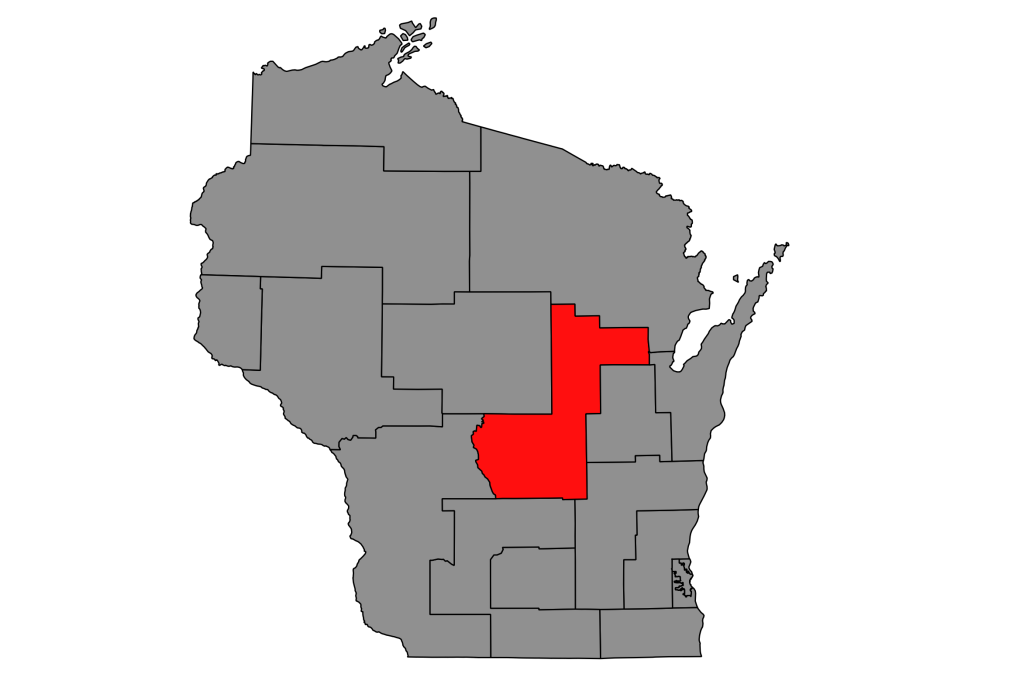


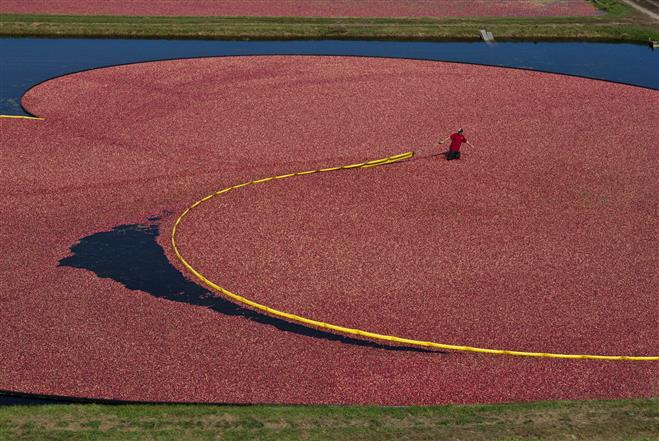


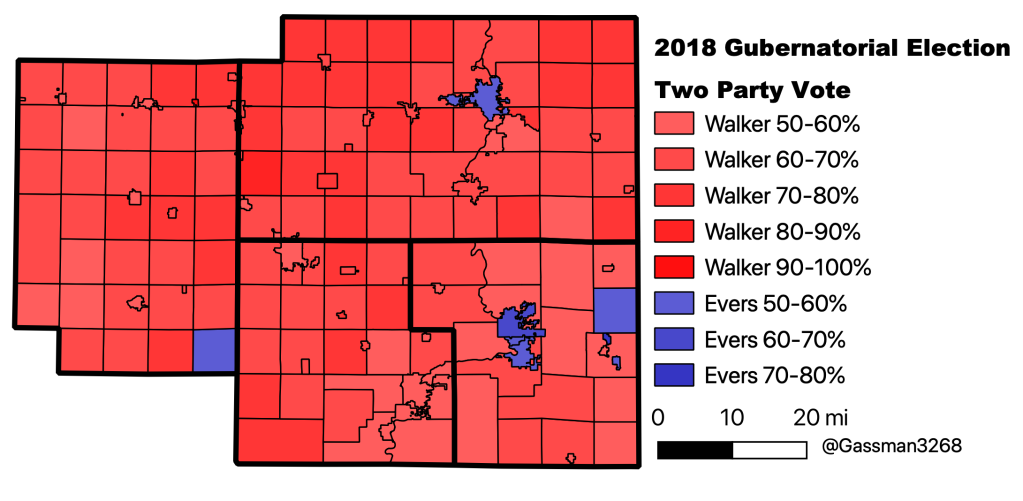


 Badger State Elections